Solar & Wind Energy — Cradle-to-Grave Site Management · Georgia · Alabama · Southeast

Cradle-to-grave site management. Built for energy.

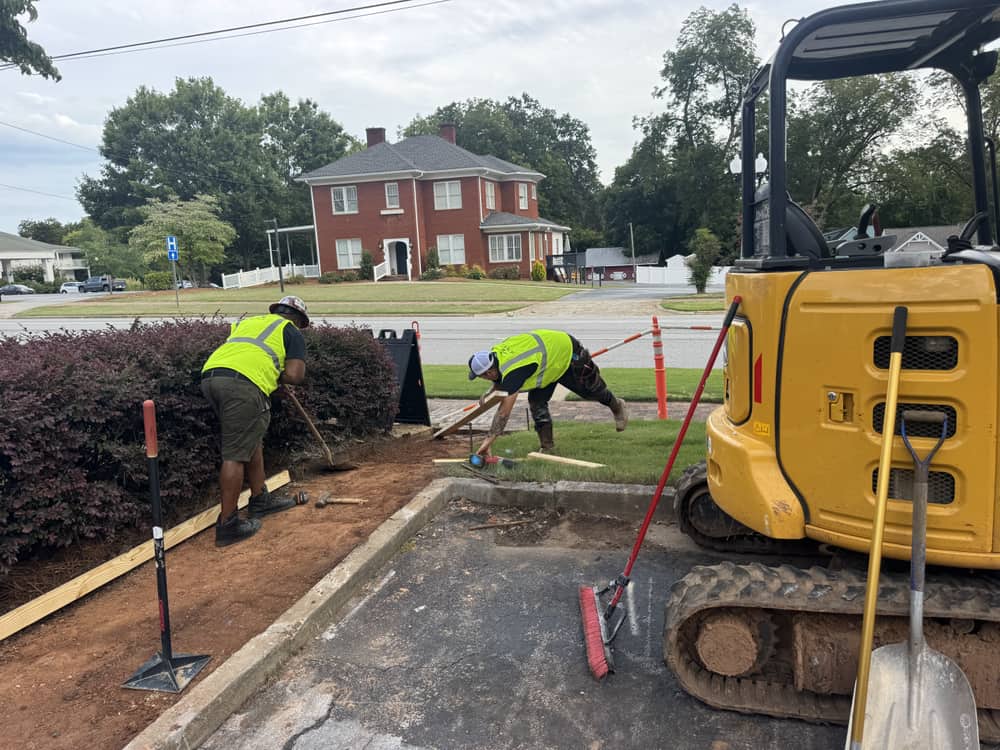
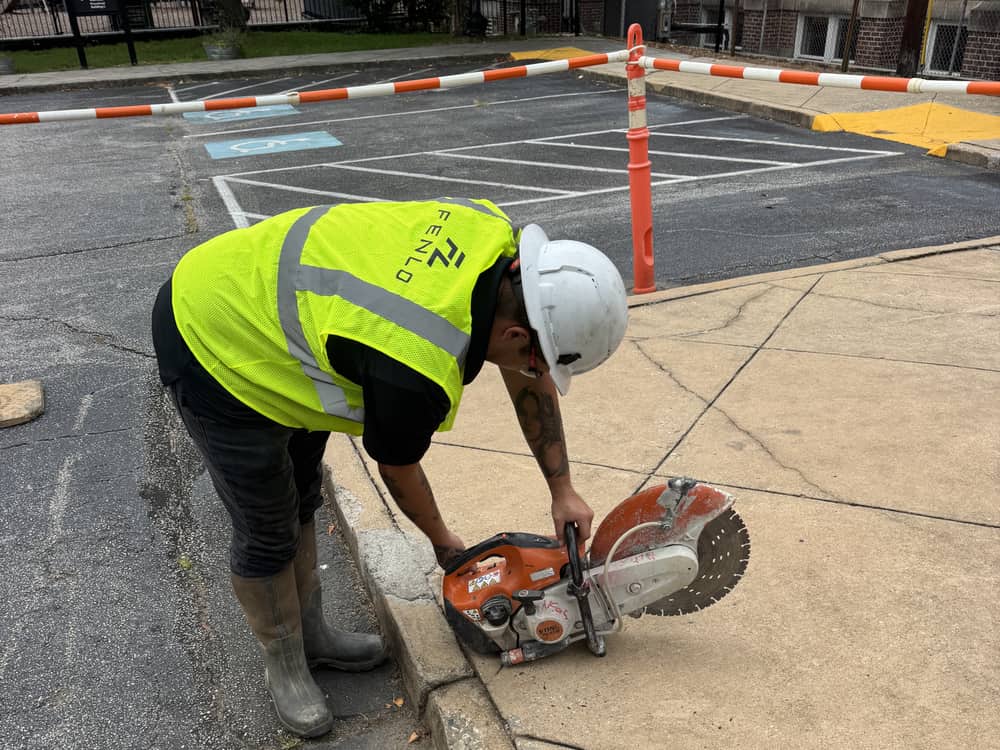
◉ Boots on the ground · Fenlo crews on active sites

Fenlo Property Services is the single accountable partner for solar and wind farm developments across the Southeast — from initial land clearing and grading through security fencing, roadside maintenance, and specialized solar panel cleaning. Led by an OSHA-authorized construction trainer, backed by safety and fleet programs built to a national standard.

FOCUS
Solar & Wind Farm Developments
CREDENTIAL
OSHA-Authorized Outreach Trainer
COVERAGE
Fully Insured · Multi-State
33.7490° N · 84.3880° W — HQ ATLANTA
The difference

Safety-first isn't a slogan here. It's a credential.

Every clearing outfit claims to be safety-first. We can prove it. Our owner is an OSHA-authorized construction outreach trainer — so we deliver the OSHA 10- & 30-hour courses and card our own crews in-house, rather than outsourcing safety to a website.

Forestry mulching, land clearing, and heavy-equipment work is genuinely high-hazard. When you hire a contractor for it, their safety record becomes your liability and their incidents become your delays. Hiring a trained, documented crew — led by someone authorized to train others — makes that risk go away.

OSHA 10 & 30Delivered & carded in-house
National-standardFleet & safety programs
Zero incidentsDocumented field safety record
Cradle to grave

From raw land to running site — and every year after.

We take a solar or wind parcel through every stage and stay on it for the life of the asset. Most operators do one piece; we own the whole sequence, so nothing falls between vendors.

01 / CLEAR

Clearing & mulching

Forestry mulching and land clearing that opens overgrown, impassable acreage.

02 / GRADE

Grading & road base

Site and access-road grading with skid steers and heavy equipment — site-ready, spec-ready.

03 / SECURE

Security & fencing

Commercial perimeter fencing and site control that removes liability for good.

04 / CLEAN

Solar panel cleaning

Specialized panel washing that protects output — a core, ongoing service, not an afterthought.

05 / MAINTAIN

Roadside & site upkeep

Recurring roadside maintenance, vegetation management, and long-term compliance oversight.

Field work

Three projects. Every layer, handled.

Each project below is a real engagement — site conditions, approach, and outcomes. Click to read the full case study.

Solar site preparation

A solar site, cleared safely — and humanely.

A renewable-energy developer's parcel had become home to several people living on-site. We resolved it with a safety-first, people-first approach: every individual was relocated with real support, the property cleared and secured, zero incidents.

Zerosafety incidents
100%residents relocated with support & services
Wetland remediation

A thousand tires, a protected wetland, and no shortcuts.

More than 1,000 tires strewn down a highway right-of-way, some reaching a wetland stream. With no heavy machinery allowed near the wetland, our crew removed and cleaned every tire by hand.

1,000+tires removed by hand
Wetlandprotected, fully intact
Site security

Ten thousand feet of fence. Sixty acres. No way in.

Three parcels bound for solar development had become a magnet for encampments, dumping, and criminal use. We cleared it, remediated it, and closed it off for good.

10,000+linear feet of perimeter fence
60+acres across 3 parcels secured
Anchor project

One property. Every layer, handled.

◇ What we inherited
01Repeated city complaints and citations over litter and illegal dumping.
02Overgrowth thick enough to hide illegal activity and unauthorized use.
03Commercial tires dumped illegally, near sensitive wetland areas.
04A property that had quietly become a standing liability.
◆ What Fenlo did
Took over cleanup — the complaints and citations stopped.
Forestry mulching to clear and open the overgrown land.
Compliant removal and disposal of the tires, per wetland regulations.
Built a commercial security fence — liability gone. We still service it today.
The client is in the solar business — and they trusted us enough to bring us into another state to support their work there too.
Why now

The Southeast is becoming the center of gravity for solar.

Every new project sits on rural, overgrown, environmentally sensitive land that has to be cleared, cleaned, secured, and maintained — safely and in compliance. Few operators handle that full lifecycle and can show up across state lines. We can, from right here in Atlanta.

~2×
Projected growth in Southeastern solar capacity by 2030.
Top-tier
Georgia ranks among the nation's leading utility-scale solar states.
2 states
Serving Georgia and southeastern Alabama — and expanding.
Full-cycle
Pre-construction through decades of operations, one partner.
Coverage

Serving solar & wind sites across the Southeast.

Atlanta, GA
HQ · 33.75° N 84.39° W
Georgia
STATEWIDE
SE Alabama
ACTIVE
Southeast
EXPANDING
Let's talk

Talk to us before your next project breaks ground.

Tell us about the site. We'll walk it, flag the risks, and give you a plan to get it clear, compliant, secured, and site-ready.

OSHA-AUTHORIZED OUTREACH TRAINER · FULLY INSURED · GA & SE AL
Project case study · Solar site preparation

A solar site, cleared safely —
and humanely.

A renewable-energy developer's parcel had become home to several people living on-site. We resolved it with a safety-first, people-first approach: every individual was relocated with real support, the property was cleared and secured, and the project moved forward — with zero incidents.

Client
Renewable energy developer
Sector
Utility-scale solar
Region
Southeast
Outcome
Secured · Development-ready
Zero
Safety incidents
Every resident
Relocated with support & services
Full parcel
Cleared of structures, debris & scrap
Handed off
Secured & development-ready
The situation

A development site that had quietly become someone's home.

The parcel was slated for a utility-scale solar development. Over time, it had also become the site of several unauthorized encampments — people living in makeshift structures within the wooded acreage.

For the developer, that created three problems at once, and they were tangled together. This wasn't a job you could bulldoze your way through.

Field documentation
Makeshift structure within the wooded parcel
Field documentation
Established encampment — initial assessment
Field documentation
Debris & scrap consolidated for removal
Field documentation
Site corridor prior to clearing

◇ Documentation from the initial site assessment · shared with care

Human safety

Real people, real risk

People were living amid hazards — exposure, debris, and a site about to become an active work zone.

Client liability

Exposure on the books

An owner carries liability for injuries and conditions on their property, occupied or not.

Development blocker

The site couldn't proceed

Structures, debris, and scrap had to be cleared and the parcel secured before work could begin.

The approach

Safety-first. And people-first.

The difference in how we handled this is the whole point: we didn't just run people off the land.

Before anyone was asked to leave, Fenlo brought in a third-party outreach organization to connect each person living on the site with real resources — pathways toward housing, help obtaining identification and driver's licenses, and connections to employment. The goal was that people left with a foundation to build on, not simply displaced to the next patch of woods.

Only then did we coordinate a safe, orderly relocation, followed by full removal of the structures, debris, and scrap, and securing of the parcel — all documented and in compliance.

01

Assess & document

Walk the parcel, document conditions, and map every structure and hazard.

02

Engage an outreach partner

Bring in a third-party organization to connect residents with housing pathways, IDs, and employment resources.

03

Relocate safely & humanely

Coordinate an orderly relocation so every individual leaves supported — not just moved along.

04

Clear structures, debris & scrap

Remove makeshift structures and haul out accumulated debris and scrap, handled compliantly.

05

Secure & hand off

Secure the parcel and hand back a clean, development-ready site.

"The goal was never just to clear the land. It was to remove the liability the right way — and give the people living there a real chance to get back on their feet."
— Fenlo Property Services
The outcome

A success on every measure that mattered.

Every individual living on the property was relocated safely and connected to support services.
Zero safety incidents across the entire project.
The parcel was fully cleared of makeshift structures, debris, and scrap.
The site was secured and handed back to the developer, development-ready.
The client's liability was removed — and their reputation protected by a humane resolution.
For a renewable-energy developer, how a sensitive site issue gets handled is a reputational question as much as an operational one.

Safety-first and people-first isn't only the right thing to do — it's how you de-risk a project like this from every angle at once.
Let's talk

Have a site with a complex clearing challenge?

If your parcel needs to be cleared, secured, and made development-ready — safely and the right way — we should talk before it breaks ground.

Project case study · Wetland remediation

A thousand tires, a protected wetland,
and no shortcuts.

Another parcel bound for solar development hid an illegal tire dump — more than a thousand tires strewn down a highway right-of-way, some reaching a wetland stream. With no heavy machinery allowed near the wetland, our crew removed and cleaned every tire by hand, then hauled them off for proper disposal.

Client
Renewable energy developer
Sector
Utility-scale solar
Scope
Wetland-safe tire removal
Volume
1,000+ tires
1,000+
Tires removed
By hand
No machinery in the wetland
Wetland
Protected from further contamination
Compliant
Cleaned, hauled & recycled
The situation

A development site with a thousand-tire secret.

The parcel was slated for a utility-scale solar development. Down the highway right-of-way, out of sight from the road, tires had been dumped for years — more than a thousand of them. Some had reached a wetland and its stream.

That turned a cleanup into one of the hardest kinds of remediation there is — three constraints working against each other at once.

Field documentation
Tires reaching the wetland stream — sheen visible at the culvert
Field documentation
Tires staged clear of the wetland for safe recovery
Field documentation
Dump running down the right-of-way, hidden from the road
Field documentation
Tires extending deep into the wooded parcel

◇ Documentation from the site assessment and removal

Environmental

A wetland at risk

Tires had reached the water, where a sheen was already visible. Leaving them wasn't an option.

Regulatory

No machines allowed

Wetland protections meant no heavy equipment could work the area. Full stop.

Disposal

Recyclers say no

Tires full of mud and debris get rejected by recycling facilities — you can't just haul them off dirty.

The approach

No machines? Then we did it by hand.

The wetland rules left exactly one option, and we took it: every tire, by hand.

Our crew hand-carried each tire out of the wetland buffer, cleaned the mud and debris off by hand so recycling facilities would accept them, and staged the whole lot well clear of the water. From there, we loaded semi-trucks and hauled everything to proper disposal.

It's slower, harder, and far more careful than running equipment through — which is exactly why the wetland came through it intact.

01

Assess & map the wetland

Walk the right-of-way, document the dump, and mark the wetland boundary and buffer.

02

Remove by hand

Hand-carry every tire out — no heavy machinery permitted anywhere near the wetland.

03

Clean by hand

Clear the mud and debris from each tire so recycling facilities would accept them.

04

Stage clear of the water

Consolidate the tires well away from the wetland for safe, compliant recovery.

05

Haul & dispose

Load semi-trucks and haul everything off to proper disposal and recycling.

"No machines allowed in the wetlands meant one thing: we did it by hand. Every tire, one at a time — because that's what protecting the water required."
— Fenlo Property Services
The outcome

Over a thousand tires gone. Wetland intact.

More than 1,000 tires removed — entirely by hand.
The wetland was protected: no machinery near the water, no further contamination spread.
Every tire was cleaned and accepted for proper recycling and disposal.
The right-of-way and parcel were cleared and made development-ready.
The developer's environmental and regulatory exposure was removed.
For a solar developer, an illegal dump or a wetland issue left in place can stall permitting and draw real penalties.

Handling it the careful way — by hand, by the book — is how you keep a project clean in every sense of the word.
Let's talk

Sitting on a dump, a wetland, or a clearing problem?

If your parcel needs to be cleared and remediated — safely, compliantly, and without cutting corners on the environment — we should talk before it breaks ground.

Project case study · Site security

Ten thousand feet of fence.
Sixty acres. No way in.

Three parcels bound for solar development had become a magnet for everything spilling out of the neighborhoods around them — encampments, dumping, drug activity, even a chop shop. We cleared it, remediated it, and then closed it off for good: over 10,000 linear feet of commercial-grade perimeter fence across 60-plus acres.

Client
Renewable energy developer
Sector
Utility-scale solar
Scope
Clearing + perimeter security
Scale
60+ acres · 3 parcels
10,000+ ft
Commercial-grade fence
60+ acres
Across 3 parcels, secured
7 ft tall
6' chain link + barbed-wire top
Full perimeter
Open access eliminated
The situation

Sixty acres, wide open — and everyone knew it.

The three parcels were slated for a utility-scale solar development. Unsecured and bordered by subdivisions and apartments, the property had quietly become a catch-all for the liabilities around it.

What was spilling in went well beyond litter: unauthorized encampments, loitering and soliciting, illegal dumping, drug activity — and organized criminal use. During the work, our crew discovered several stolen vehicles staged on the property, including a skid steer and a trailer, all removed by law enforcement. The land had effectively become a stash point.

Field documentation
New perimeter running the property line — 10,000+ LF
Field documentation
Secured, posted access points
Field documentation
6' chain link, 3-strand barbed-wire top — creek crossing
Field documentation
Fence line cut and built through raw forest

◇ Documentation from the completed perimeter

Security

An open 60 acres

With no perimeter, anyone could walk on — and did. Every intrusion was the owner's liability.

Criminal use

A stash point

Stolen vehicles, a chop shop, and dumping had taken hold on an unwatched site.

Development

A moving target

You can't develop — or even keep clear — a site that keeps getting re-occupied.

The approach

Clear it, take it back, then close it off.

This project ran in an unusual order — and that was the key to it working.

Normally we fence a site after it's cleared. Here we couldn't. The intrusion was constant, so securing the perimeter had to be part of the clearing — not a step after it.

So we ran the whole operation as one: clear and remediate the parcels, work with authorities to remove what didn't belong, cut a fence line through raw forest, and build a perimeter strong enough that the property would stay clear once we left.

01

Clear & mulch

Forestry mulching and land clearing across all three parcels.

02

Remediate

Remove dumped tires and debris; resolve the encampments safely and humanely.

03

Recover & report

Document and coordinate law-enforcement removal of stolen property, including a skid steer and a trailer.

04

Cut the fence line

Clear a perimeter line through raw forest across three parcels and 60+ acres.

05

Build & secure

Install 10,000+ linear feet of 6' commercial chain link topped with a 1' three-strand barbed-wire extension, and post the property.

"You can't keep sixty acres clear if the door's always open. So we closed it — ten thousand feet of it."
— Fenlo Property Services
The outcome

A property that finally works for its owner.

Over 10,000 linear feet of commercial-grade fence — 6' of chain link plus a 1' three-strand barbed-wire top — across three parcels and 60+ acres.
The entire perimeter secured; open access eliminated.
Multiple stolen vehicles, including a skid steer and a trailer, recovered and removed by authorities.
Encampments, tires, and debris cleared — and the conditions that invited criminal use designed out.
The developer's risk and exposure minimized, with real peace of mind delivered.
An unsecured 60 acres isn't just an eyesore — it's continuous liability, theft, and delay.

Closing the perimeter turned a property that had been working against its owner into one that's ready to be developed.
Let's talk

Need to secure a site — or take one back?

Whether it's a fresh parcel or one that's already been overrun, we clear it, remediate it, and lock the perimeter down so it stays that way.